
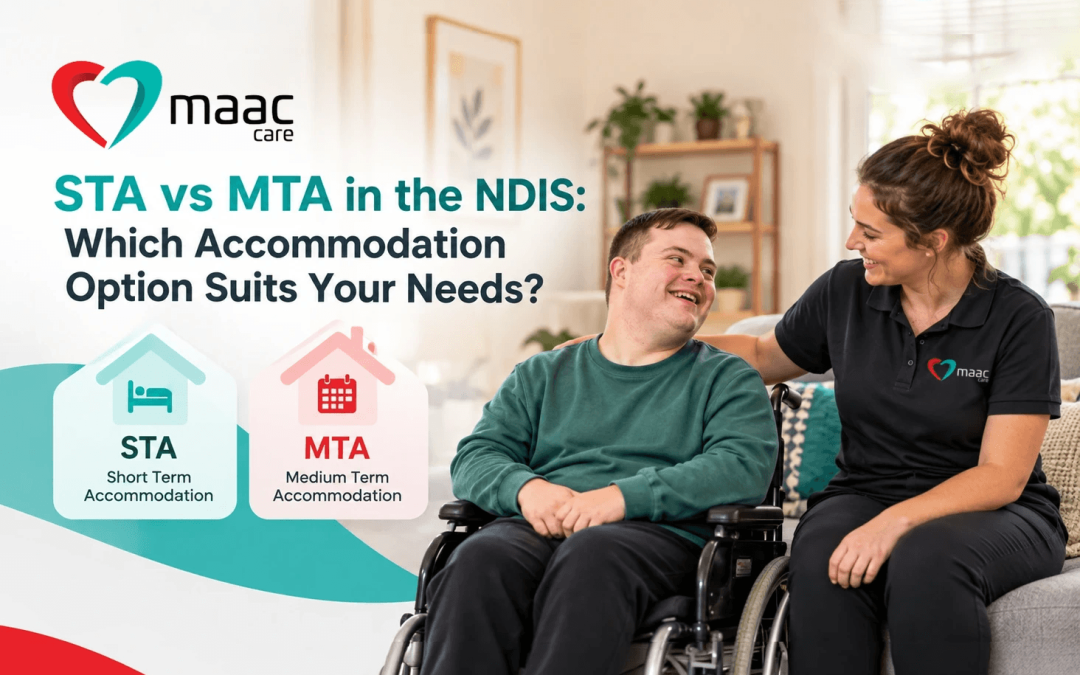
When exploring NDIS accommodation, families often come across terms such as Short Term Accommodation (STA), Medium Term Accommodation (MTA) and respite. Understanding the difference between these options can help families make more informed decisions about the support available to their loved ones.
If you are looking for NDIS accommodation in Melbourne, understanding the purpose of STA and MTA is a useful starting point. Although both involve temporary accommodation, they are designed for different circumstances.
The most suitable option depends on the participant’s current living situation, support needs, personal goals and longer-term housing arrangements.
What Is Short Term Accommodation (STA)?
Short Term Accommodation (STA) provides temporary accommodation along with support for eligible NDIS participants.
STA may help participants experience a different living environment, develop everyday living skills, participate in community activities or work towards greater independence. It may also provide respite for families and informal carers.
For example, a participant living with their family may use an STA stay to practise daily routines, try new activities and build confidence in a supported environment.
Families looking for NDIS Short Term Accommodation in Melbourne should consider the purpose of the stay and the support the participant needs, rather than focusing only on the accommodation itself.
What Is Medium Term Accommodation (MTA)?
Medium Term Accommodation (MTA) serves a different purpose. It may be available to eligible NDIS participants who have a longer-term housing solution identified but are unable to move into it yet.
For example, a participant may be waiting for their new home to become available or for necessary housing arrangements to be completed. MTA may provide temporary accommodation during this transition, subject to NDIS eligibility and funding requirements.
For families exploring NDIS Medium Term Accommodation in Melbourne, it is important to understand that MTA is intended to address a temporary gap while the participant waits for their longer-term housing arrangement.
STA vs MTA: What Is the Difference?
The main difference between STA and MTA is the reason the participant needs temporary accommodation.
Short Term Accommodation (STA) may support short stays involving respite, community participation, skill development and opportunities to practise independence.
Medium Term Accommodation (MTA) may support eligible participants who need somewhere to stay while waiting for their confirmed longer-term housing solution to become available.
The duration of the stay is one consideration, but the participant’s circumstances and the purpose of the accommodation are also important.
Neither option should be selected based on duration alone. Families should discuss their circumstances with an appropriate NDIS professional to understand the available options and applicable funding requirements.
Is STA the Same as Respite?
No. Although STA may provide respite, the two terms do not always mean the same thing.
Respite generally refers to a break for family members or informal carers from their caring responsibilities. STA can provide this opportunity while ensuring that the participant receives appropriate support during their stay.
However, STA may also support other goals, such as developing daily living skills, participating in community activities and gaining experience in a different environment.
Understanding the participant’s individual needs can help families identify whether STA may be suitable for their circumstances.
Which Accommodation Option Might Suit Your Needs?
The appropriate option depends on the participant’s situation and the purpose of the accommodation.
For example, consider a participant who lives with their family and wants to develop greater independence. A short stay may provide an opportunity to practise cooking, follow daily routines and participate in activities with appropriate support.
In another situation, a participant may already have a longer-term housing arrangement planned but be unable to move into it immediately. MTA may be relevant while they wait for their new home to become available, provided the applicable eligibility and funding requirements are met.
These examples illustrate why families should first identify the reason accommodation is needed.
If you are unsure which option to explore, a support coordinator, plan manager or appropriate NDIS provider may help you understand the available services and relevant funding considerations.
What Should You Look for in NDIS Accommodation in Melbourne?
Once you understand the type of accommodation you may need, the next step is to consider whether the provider and environment are suitable for the participant.
Here are some factors to consider:
- Accessibility: Does the accommodation meet the participant’s mobility and accessibility requirements?
- Available support: Is the level of assistance suitable for their individual needs?
- Location: Is the accommodation conveniently located near community facilities and essential services?
- Privacy and comfort: Does the environment provide appropriate personal space?
- Daily routines: Can the provider accommodate the participant’s routines and preferences?
- Individual needs: Can the support arrangements be adapted to the participant’s circumstances?
- Personal goals: Does the environment support independence, participation and other relevant goals?
It is also worth discussing how the provider delivers individualised support. Two accommodation options may appear similar but offer different experiences depending on the support available.
Questions to Ask an NDIS Accommodation Provider
Before choosing an accommodation provider, families should understand what is included and how the service will meet the participant’s needs.
Consider asking the following questions:
What type of accommodation do you provide?
Clarify whether the provider offers STA, MTA, Supported Independent Living (SIL) or other accommodation and support services.
What support is available during the stay?
Ask about the level of assistance provided and whether it meets the participant’s support requirements.
Is the accommodation suitable for the participant’s needs?
Discuss accessibility, communication needs, daily routines and personal preferences.
What costs are included?
Ask for a clear explanation of the accommodation arrangements, included supports and any additional costs.
How does the service relate to the participant’s NDIS plan?
Confirm whether the proposed support is consistent with the participant’s circumstances, applicable NDIS rules and available funding.
Asking these questions can help families compare providers and better understand their options before making a decision.
Understanding NDIS Accommodation Funding
NDIS accommodation and support funding can be an important consideration when comparing STA and MTA.
Not every accommodation expense is automatically covered by NDIS funding. Funding depends on the participant’s individual circumstances, plan and the relevant NDIS requirements.
Before confirming an arrangement, consider:
- What accommodation and support services are being provided.
- Which costs are included and which may need to be paid separately.
- Whether the participant meets the relevant eligibility requirements.
- Whether appropriate funding is available.
- How the arrangement supports the participant’s needs and goals.
For MTA in particular, families should understand the housing situation and eligibility requirements before assuming funding will be available.
A support coordinator or appropriate NDIS professional can help clarify questions about the participant’s plan and available options.
Finding the Right NDIS Accommodation in Melbourne
Choosing between NDIS Short Term Accommodation and Medium Term Accommodation involves understanding the participant’s current circumstances rather than simply comparing the services.
STA may be worth exploring when a participant needs a short stay that supports respite, skill development, community participation or other relevant goals.
MTA may be relevant when an eligible participant has a longer-term housing solution identified but needs temporary accommodation while waiting to move in.
The provider is also an important consideration. Families should look for an environment that respects the participant’s preferences, understands their support needs and promotes their individual goals.
Taking the time to understand these factors can help families make more informed accommodation decisions.
How MAAC Care Can Help
Finding suitable NDIS accommodation can involve several considerations, from understanding the available options to identifying the right level of support.
MAAC Care provides NDIS support and accommodation services in Melbourne, including Short Term Accommodation (STA), Medium Term Accommodation (MTA), Supported Independent Living and other support services.
If you are exploring accommodation for yourself or a family member, the MAAC Care team can discuss your circumstances, support requirements and accommodation needs to help you understand the available services.
Looking for NDIS accommodation in Melbourne? Contact MAAC Care to discuss your accommodation and support requirements.
Frequently Asked Questions
1. What is the difference between STA and MTA in the NDIS?
STA may support short stays involving respite, skill development and community participation. MTA may provide temporary accommodation for eligible participants waiting for their longer-term housing solution.
2. Who may be eligible for NDIS Medium Term Accommodation?
MTA may be relevant to participants who have a longer-term housing solution identified but cannot move into it yet. Eligibility and funding depend on the participant’s circumstances and applicable NDIS requirements.
3. Is STA the same as respite?
No. STA can provide respite for families and informal carers, but it may also support other participant goals, including developing everyday living skills and participating in community activities.
4. How do I choose between STA and MTA?
Start by identifying why temporary accommodation is needed. Consider the participant’s current living arrangements, support requirements, goals and longer-term housing plans. An appropriate NDIS professional can help clarify the options.
5. What should I look for in NDIS accommodation in Melbourne?
Consider accessibility, location, privacy, available support, daily routines and whether the provider can accommodate the participant’s individual needs and goals.
6. Does the NDIS cover all accommodation costs?
No. Funding depends on the participant’s circumstances, plan and applicable NDIS requirements. Families should confirm which accommodation and support costs may be funded before making arrangements.
7. Where can I find NDIS accommodation support in Melbourne?
Families can explore suitable NDIS providers in Melbourne and ask about the accommodation types and support services available. MAAC Care offers STA, MTA, SIL and other NDIS support services.